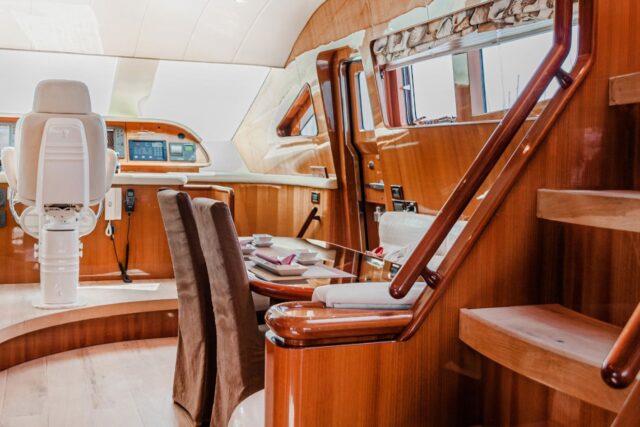
Time spent on the water should feel relaxed and effortless. Boat owners today pay close attention to comfort, durability, and atmosphere onboard. Seating and soft surfaces influence all three. When it comes to marine upholstery, many owners turn to experienced professionals to refresh interiors and improve how a vessel feels during everyday use.
Boats face constant exposure to sun, moisture, and movement. Upholstery quietly absorbs this stress while supporting passengers throughout each trip. Its role is often underestimated until it begins to fail.
work together, interiors feel intentional and refined.
What Marine Upholstery Includes
Marine upholstery refers to all soft interior and exterior elements designed specifically for marine conditions. In other words, it covers far more than seat cushions alone.
Common elements include:
- Seating and backrests
- Helm and captain chairs
- Interior wall and ceiling panels
- Sun pads and lounging areas
- Exterior seating surfaces
Together, these components define how comfortable and inviting a boat feels during real use.
Why Marine Upholstery Is Different From Standard Upholstery
Marine environments demand specialized materials and construction methods. Unlike household interiors, boats are constantly exposed to salt air, humidity, and strong UV radiation. Because of this, regular fabrics and foams tend to fail quickly.
Quality marine upholstery is designed to resist fading, cracking, and moisture absorption. As a result, surfaces stay cleaner, stronger, and more comfortable over time. Moreover, marine grade materials reduce the risk of mold and unpleasant odors.
Comfort Is a Functional Requirement
Comfort on a boat is not just about softness. Instead, it depends on proper support and stability. Well designed marine upholstery helps maintain posture, especially during long trips or rough water conditions.
For example, supportive seating reduces back strain and leg fatigue. In addition, proper cushioning absorbs movement and vibration. Over time, these factors significantly improve the overall boating experience.
The Role of Upholstery in Interior Atmosphere
Upholstery plays a major role in how a boat feels emotionally. Colors, textures, and finishes influence mood and perceived space. Therefore, thoughtful design choices matter.
Light tones often create a calm and open atmosphere. Meanwhile, warmer textures add depth and comfort. When upholstery elements are visually coordinated, interiors feel balanced rather than cluttered.
As a result, marine upholstery connects different areas of the vessel into a single, cohesive environment.

Durability and Ease of Maintenance
Another important advantage of marine upholstery is long term practicality. Materials designed for marine use are easier to clean and maintain.
Owners typically benefit from:
- Faster drying after water exposure
- Reduced staining and odor buildup
- Slower wear in high use areas
- Longer replacement intervals
Consequently, maintenance becomes less stressful and more predictable.
Why Professional Craftsmanship Matters
Even the best materials require proper installation. Marine upholstery must account for constant movement and tension. Therefore, craftsmanship plays a critical role in long term performance.
Professional work usually involves:
- Accurate pattern fitting
- Reinforced stitching in stress zones
- Correct foam density selection
- Secure fastening methods
These details may not be immediately visible. However, they strongly influence how upholstery performs after months and years of use.
Marine Upholstery and Boat Value
Interior condition affects how a boat is perceived. Clean, supportive upholstery signals care and attention. As a result, buyers often associate good upholstery with overall vessel quality.
Well maintained marine upholstery can improve resale appeal and shorten selling time. Moreover, it helps preserve the character and identity of the boat.
A Shift in Modern Boating Culture
The growing focus on marine upholstery reflects a broader change in boating culture. Boats are no longer viewed only as tools for transport. Instead, they serve as personal spaces for relaxation, socializing, and escape.
Because comfort influences how often boats are used, interior quality matters more than ever. Upholstery quietly supports these expectations without drawing attention to itself.
Conclusion
Marine upholstery shapes comfort, durability, and atmosphere on boats and yachts in powerful but subtle ways. From seating support to interior harmony, its impact is felt during every moment on the water. With the right materials and skilled execution, upholstery becomes an investment in better experiences, longer vessel life, and greater enjoyment at sea.